









After a year-long wait, “Wicked: For Good,” the second half of the “Wicked” film collection, arrived in theaters with a deeper and darker tone that closes the story of Elphaba the Wicked Witch and Glinda the Good. While “Wicked” felt bright, bubbly and instantly catchy, “Wicked: For Good” explores the consequences of the heartbreaking sacrifice made between characters after the series’ best-known song “Defying Gravity.”
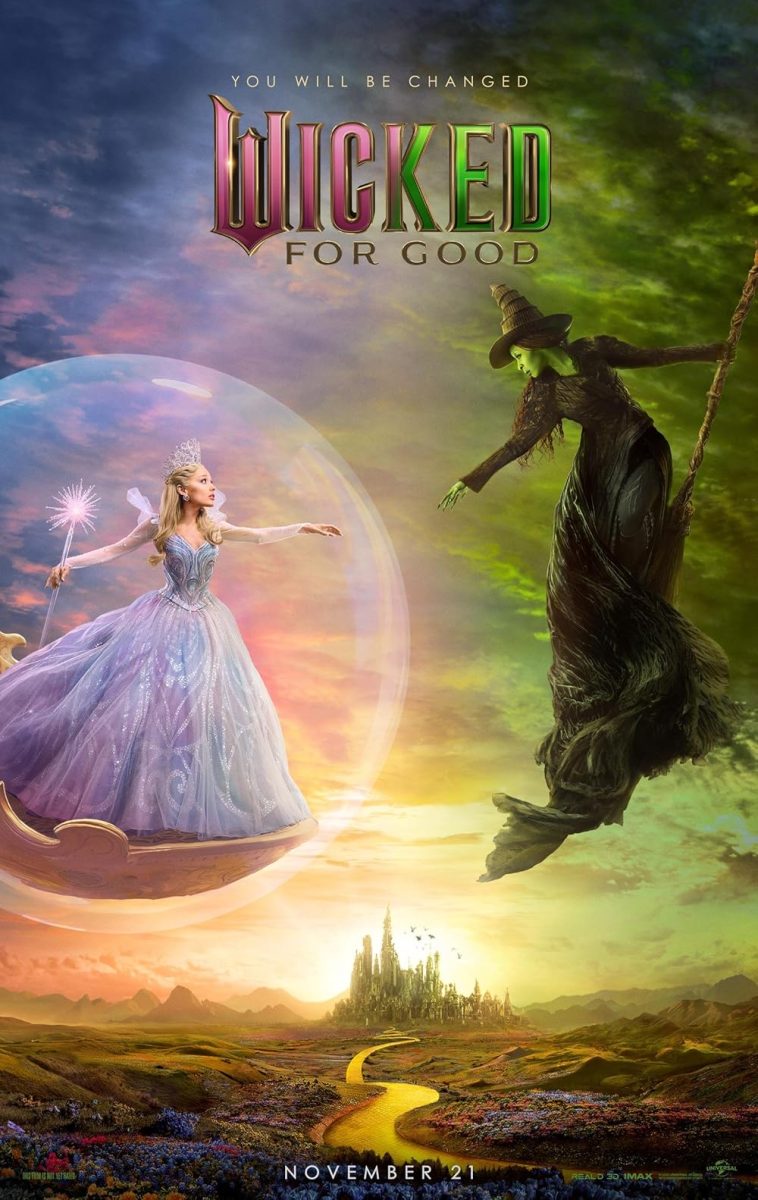
Visually, the movie is stunning. Oz feels bigger and more intimidating when compared to “Wicked” because there are more scenes that show off small details. The production team did an excellent job capturing the rich greens and shadows that match the second part’s dark feeling.
There are subtle details that make the film even better to watch. The worn-out edges from the Grimery or the fine sparkles on Glinda’s bubble ball gown are a few examples. It keeps the audience engaged with the screen and allows the setting to feel complete.
The vocals from “Wicked: For Good” also stand out in a murky, but beautiful way from the first film. Cynthia Erivo, who plays Elphaba, delivers some of the strongest singing in the entire franchise. Her voice sounds controlled, but still carries the emotion, often on the verge of shakings. This allows viewers to hear the ongoing emotions that Elphaba is experiencing through Erivo’s mature singing.
Ariana Grande’s performance as Glinda shifts through the songs, too. Her songs go from very upbeat in the first movie to more mature and darker songs in the second movie. Grande executes this well while revealing more about the feelings of Glinda and Elphaba’s friendship and the distress that runs throughout “Wicked: For Good.”
The songs from “Wicked: For Good” themselves are less recognizable than the big hits from the original movie. Instead, they add much more emotional weight to the plot. They feel quieter and more internal, strengthening the characters’ stories in ways “Wicked” never came close to doing.
The new type of sounds allows for a reflection of how far they have come from the first movie. The upbeat “What is this Feeling,” sung by both Erivo and Grande, is a catchy song from “Wicked,” but even though they are the same song, the reprise version that is played in “Wicked: For Good” has an edgier and scarier feeling.
Since the second part is filled with so much plot and story, some moments that should have felt huge do not receive the attention they deserve, and make the scenes feel unimportant compared to others. The reveal that the Wizard is actually Elphaba’s father is an example of this.
Even though “Wicked: For Good” shows his reaction, it could have been carried out more by showing his guilt and the unraveling of himself from that reaction. Instead, the audience is just left with the initial shock and a reaction in a blink, with the movie already moving onto another piece of information. It is a missed opportunity for real depth and could have added layers to both characters who are directly involved.
Comparing part one and part two shows just how different they really are. “Wicked” was bright and fast-paced with recognizable songs, which made it feel familiar even to people who had not seen the musical. “Wicked: For Good” was shadowed and emotional. They fit together perfectly, but do not feel the same.
“Wicked: For Good” is a beautiful and emotional conclusion that delivers on story and visuals. The films together create a dramatic retelling of Glinda and Elphaba’s friendship as it continues to show a magical and unforgettable way to share a famous story.
Contact Anna Vitiello at [email protected]