
















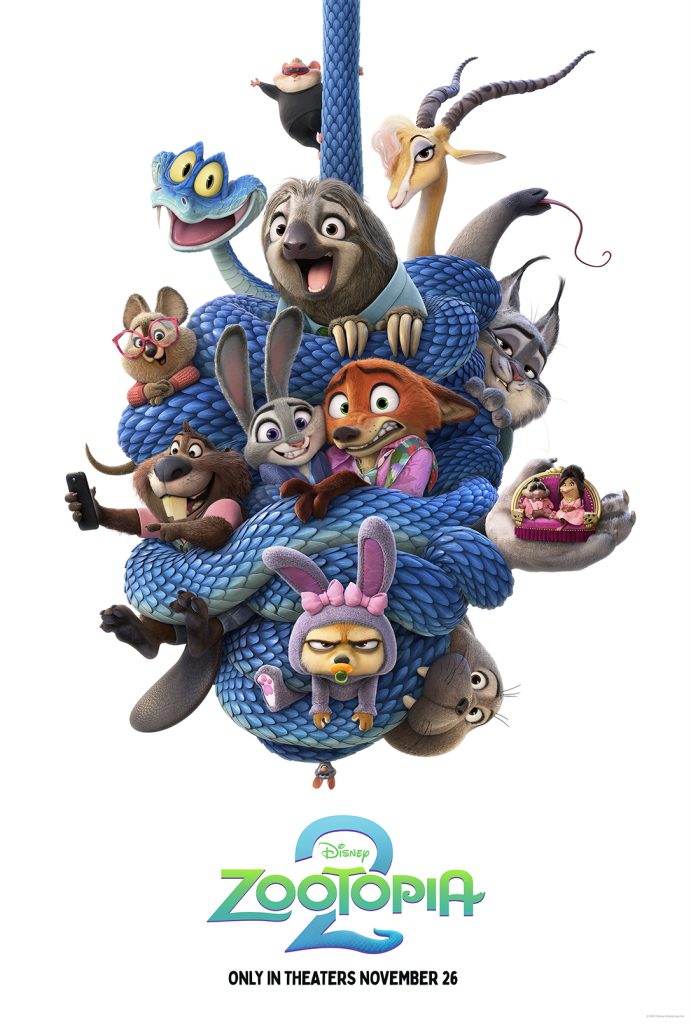
In a whirlwind buddy-cop adventure, “Zootopia 2” welcomes viewers back into the immersive, bustling animal metropolis that entranced fans of the first “Zootopia” movie–this time with even more twists and turns.
“Zootopia 2” released on Nov. 26, nearly 10 years after the release of the original “Zootopia” film in 2016. Immediately after releasing, the sequel broke the record for the biggest opening weekend of an animated movie, grossing an estimated $556 million worldwide.
In this charming sequel to the original film, “Zootopia 2” once again follows spunky rabbit detective Judy Hopps and her sarcastic fox partner, Nick Wilde as they unravel the mystery behind the powerful Lynxley family’s heirloom journal, which harbors one of Zootopia’s oldest and darkest secrets.
“Zootopia 2” tackles mature and complex social issues such as systemic racism, oppression and even racial subjugation, all thinly-veiled under animal metaphors. The issues are presented in ways that are digestible for children while still being complex and impactful.
The species-based racism was not simply “fixed” after the events of the first movie. Instead, it is still established as a major problem in the second movie despite the previous progress made, allowing the plot to build off of it and let characters grow rather than creating an unrealistic immediate solution.
Alongside the messaging, the plot of “Zootopia 2” is consistently engaging and entertaining, playing off of the same tropes as the first movie through Wilde and Hopps’ partnership while introducing fresh ideas. New types of animals and areas of the city are included in the plot seamlessly, almost to the point that it is easy to forget that they were not included in the original film.
Speaking of new scenery, the new areas of the city were extremely well designed. Wilde and Hopps were introduced to an entirely new district: Marsh Market. This introduced fans to new species of characters like sea lions, beavers and lizards by giving them a unique culture that differed from the rest of the animal neighborhoods. The fact that Marsh Market has a different culture from the rest of Zootopia makes for interesting storytelling and worldbuilding, as this district was cut off from the others because reptiles lived there. Overall, the environment in “Zootopia 2” strongly contributed to the themes in the film, adding meaning while creating an interesting setting.
While taking on countless life-threatening situations and plot twists, Wilde and Hopps also struggle to keep their relationship stable throughout the story. Their mismatched personalities make for an engaging dynamic, as seen in the first film, but also feed into conflict between the two partners. Thanks to their conflicts, Wilde and Hopps’ relationship was much more complex than most people would expect from a children’s movie.
One critique about “Zootopia 2” is that, since many aspects of the movie were so mature and complex, it could be difficult for children to understand at times. Much of the humor is completely over children’s heads and could have been perceived as inappropriate for them. It felt like Disney was trying to appease adult viewers of the movie over children, which may take away from the experience for families with young children.
“Zootopia 2” was an absolute success for Disney, and it might just be one of the rare instances where a sequel is better than the original movie. The setting design and character development strengthened the series’ consistent commentary on social issues, making it a powerful addition to the “Zootopia” franchise.
Contact Emma Lynch at [email protected]
